Monday - Friday 07:30 - 17:30, Saturday 07:30 - 16:00
Forest Hill Floorboard Restoration
Back to Portfolio
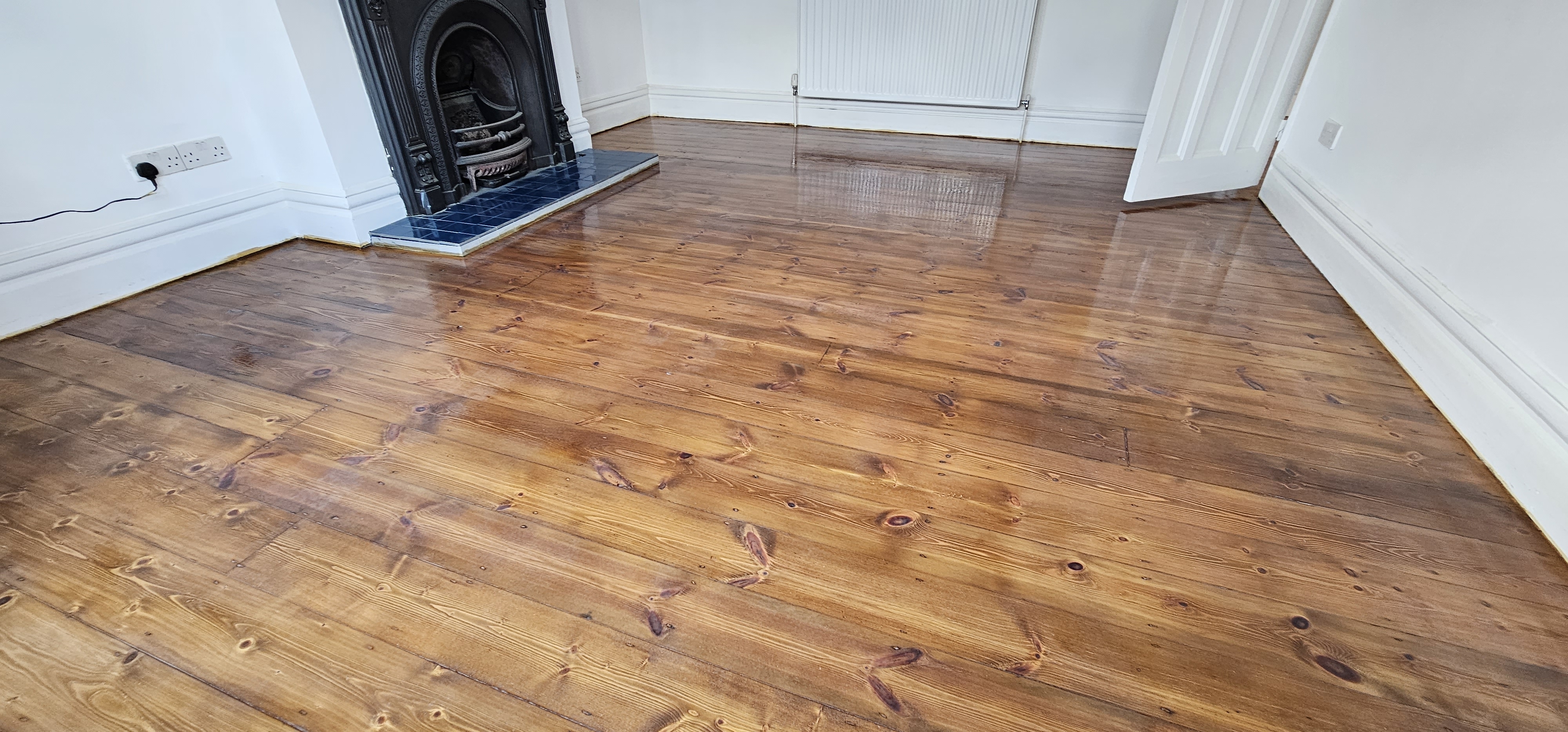
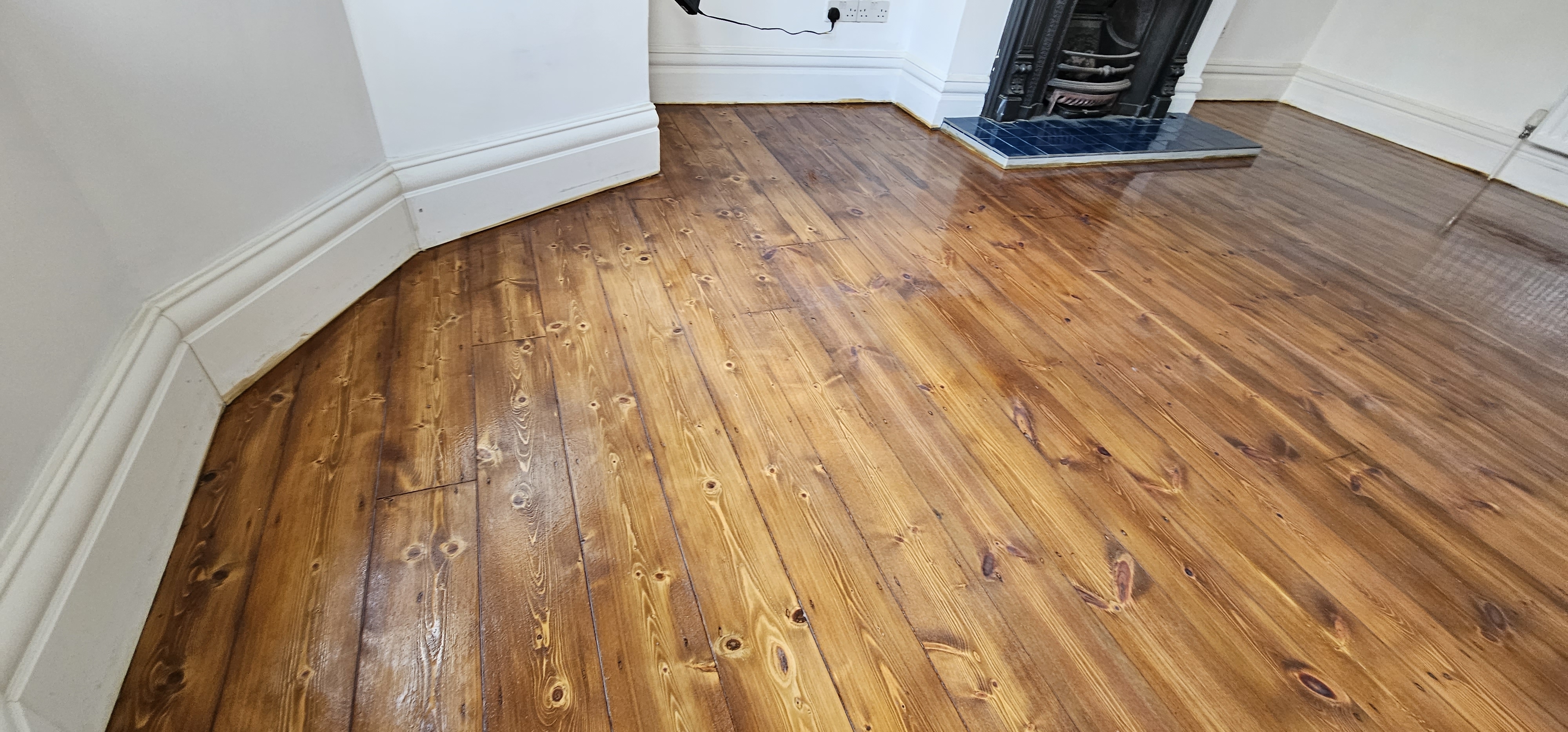
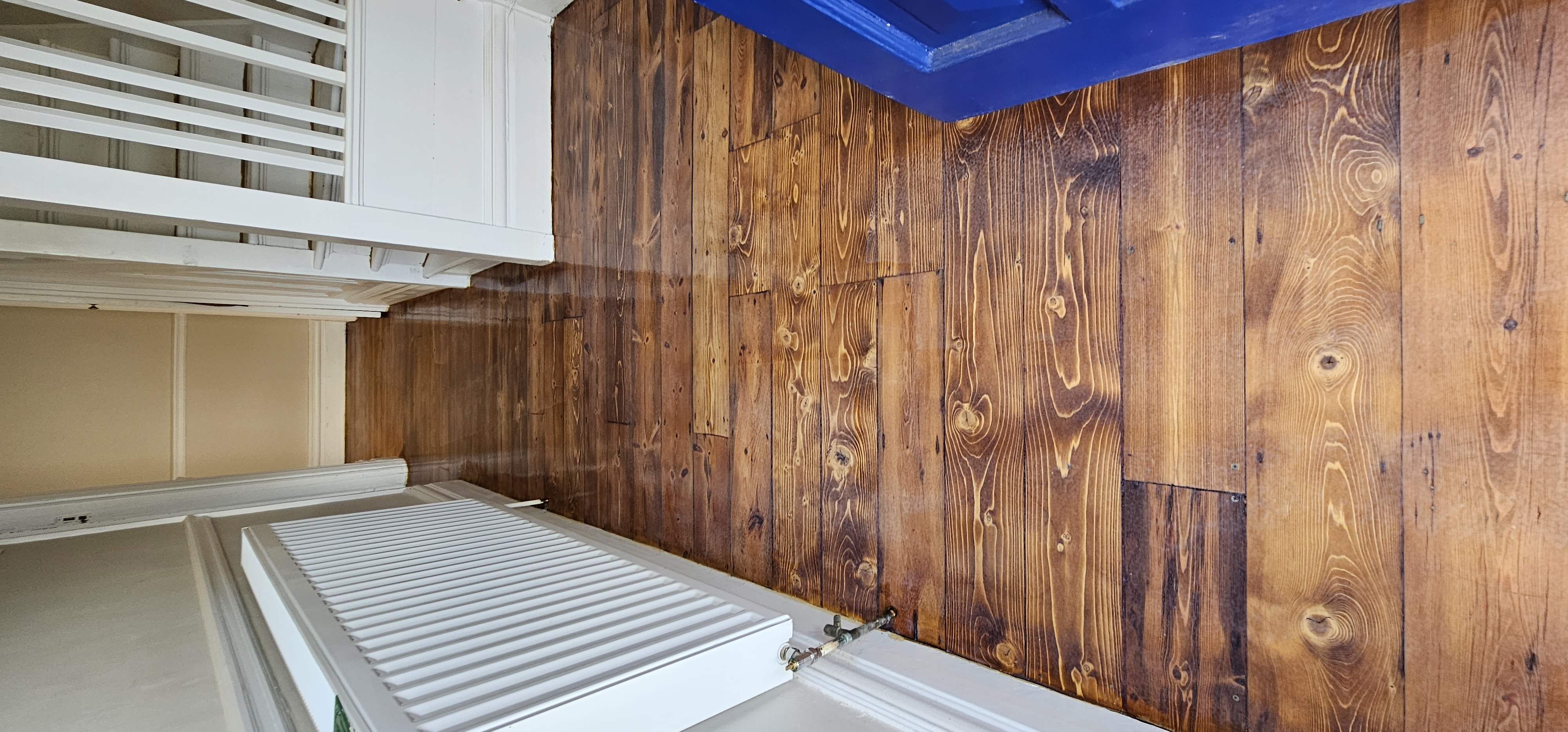
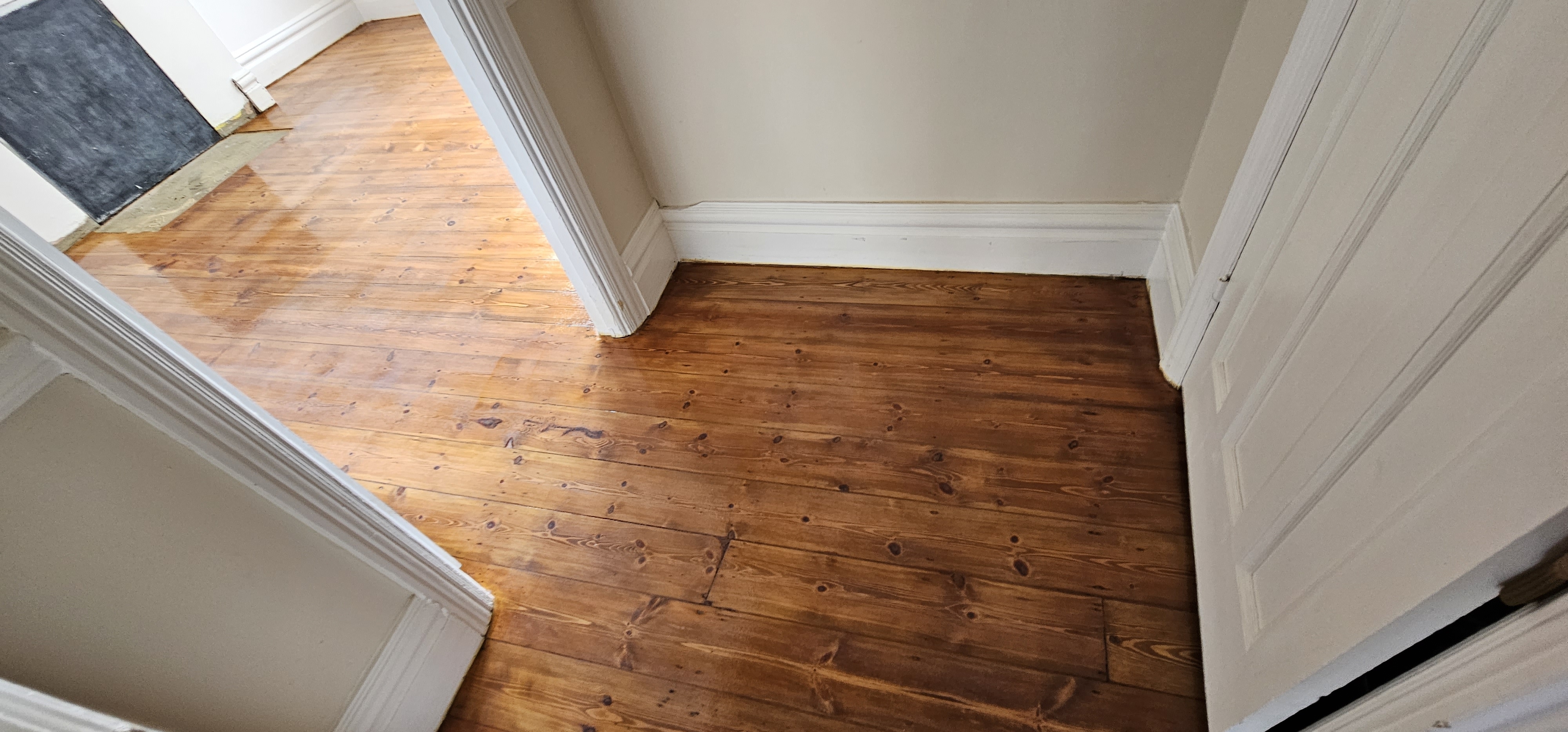
Forest Hill Floorboard Restoration
This Forest Hill property showed original Victorian floorboards that had become heavily worn and scratched over decades of use. The owners wanted to restore the boards to their former condition rather than replace them, so we carried out a full sanding and finishing project to bring back the natural beauty of the timber.
Work carried out
- Floor inspection and damage assessment
- Gap filling between boards using appropriate timber
- Multi stage sanding process using industrial equipment
- Dust containment throughout the works
- Hand sanding of edges and tight areas
- Wood stain application and colour matching
- Polyurethane finish in satin sheen
- Final polishing and quality inspection
About the project
The floorboards in this Forest Hill home were original Victorian pine, measuring around 150mm wide with traditional tongue and groove joinery. They'd taken considerable punishment from foot traffic and furniture movement, with numerous deep scratches and some areas of cupping where moisture had caused the boards to warp slightly. The owners had tried various surface treatments over the years, but nothing had provided lasting results. What they really needed was professional restoration that would remove the damaged surface layer and expose fresh timber underneath.
Our approach involved starting with coarse grit paper to cut through old finishes and level any unevenness in the boards. We then progressed through medium and fine grits to achieve a smooth, even surface ready for staining and sealing. The trickiest part was around the fireplace, where the floorboards had faded unevenly due to years of sunlight exposure. We colour matched the stain across the entire room to even out these variations and create a consistent appearance. The final polyurethane coat was applied in two layers with light sanding between coats for adhesion. The whole project took around four working days from start to finish.
About our Forest Hill Floorboard Restoration service
Forest Hill has a large concentration of Victorian and Edwardian properties, many of which still retain their original timber floors. These period homes often have wide boards, usually between 125mm and 200mm, often made from softwoods like pine or fir. The age and quality of these floors varies considerably depending on maintenance history and what treatments they've received over the years. Some have been painted or heavily varnished multiple times, while others have been covered with carpets or vinyl that can trap moisture and cause damage to the underlying timber.
We regularly work on residential properties throughout Forest Hill, from period conversions and Victorian terraces to more modern developments where owners want to upgrade original pine flooring. Alongside traditional timber types, we also encounter engineered boards in newer builds and some imported hardwoods like oak and ash in more recently renovated homes. Whatever the floor type or condition, we assess each project individually and recommend the most suitable restoration approach. Some floors need aggressive sanding with multiple grit stages, while others just need light refreshing with fine papers to restore their appearance without removing too much material.
Frequently asked questions
How much does floor sanding cost?
Sanding costs typically range from £25 to £45 per square metre depending on the floor condition, board width, and complexity of the layout. Heavily damaged floors with paint or multiple old varnish layers cost more to prepare, as do rooms with detailed layouts or lots of tight corners requiring hand work. We provide a detailed quote after assessing the floor.
How long does sanding take?
A straightforward sanding project on a medium sized room usually takes two to three days. Larger areas or particularly challenging floors may take longer. Once sanded, you'll need to allow time for stain to dry before applying finish coats, which typically adds another two to three days depending on the products used and drying conditions.
Is the sanding process dusty?
Modern industrial sanders produce significant dust, but we control this through dedicated dust extraction systems connected to our equipment. We also seal doorways and use air filtration during works. Some fine particles inevitably escape, so we recommend removing soft furnishings and covering items you can't move before we start.
Project Gallery