Monday - Friday 07:30 - 17:30, Saturday 07:30 - 16:00
Floor Sanding in Croydon
Back to Portfolio
Floor Sanding in Croydon
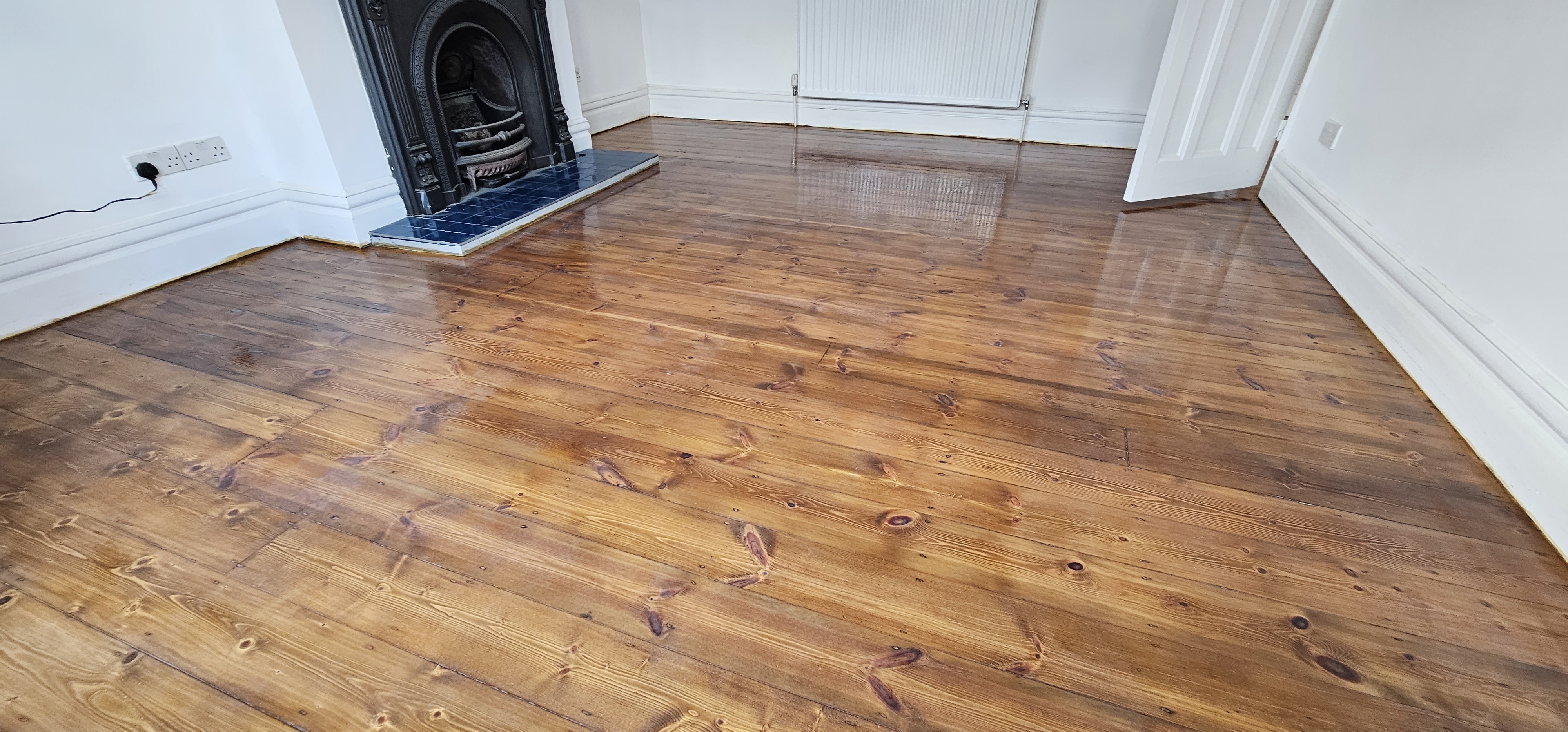
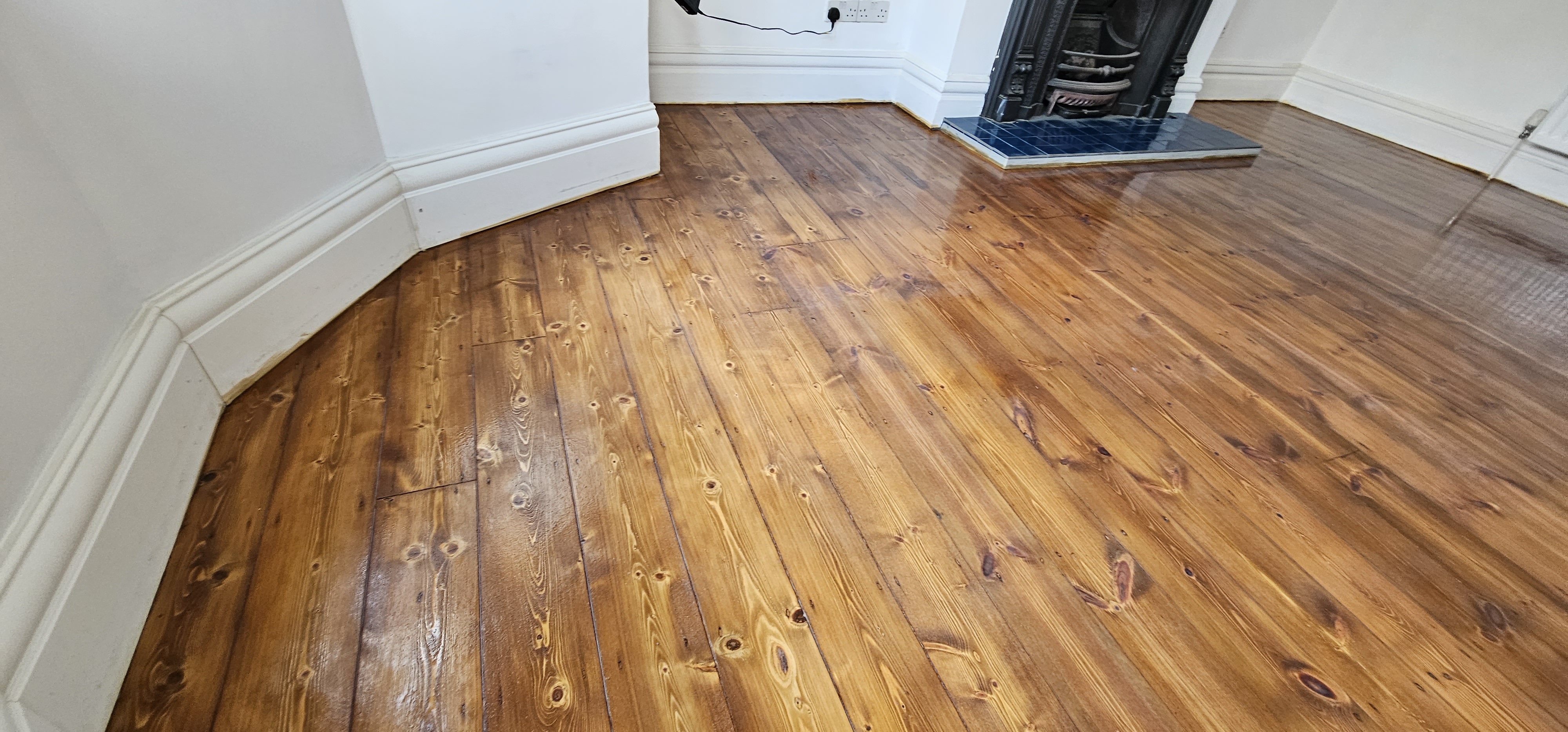
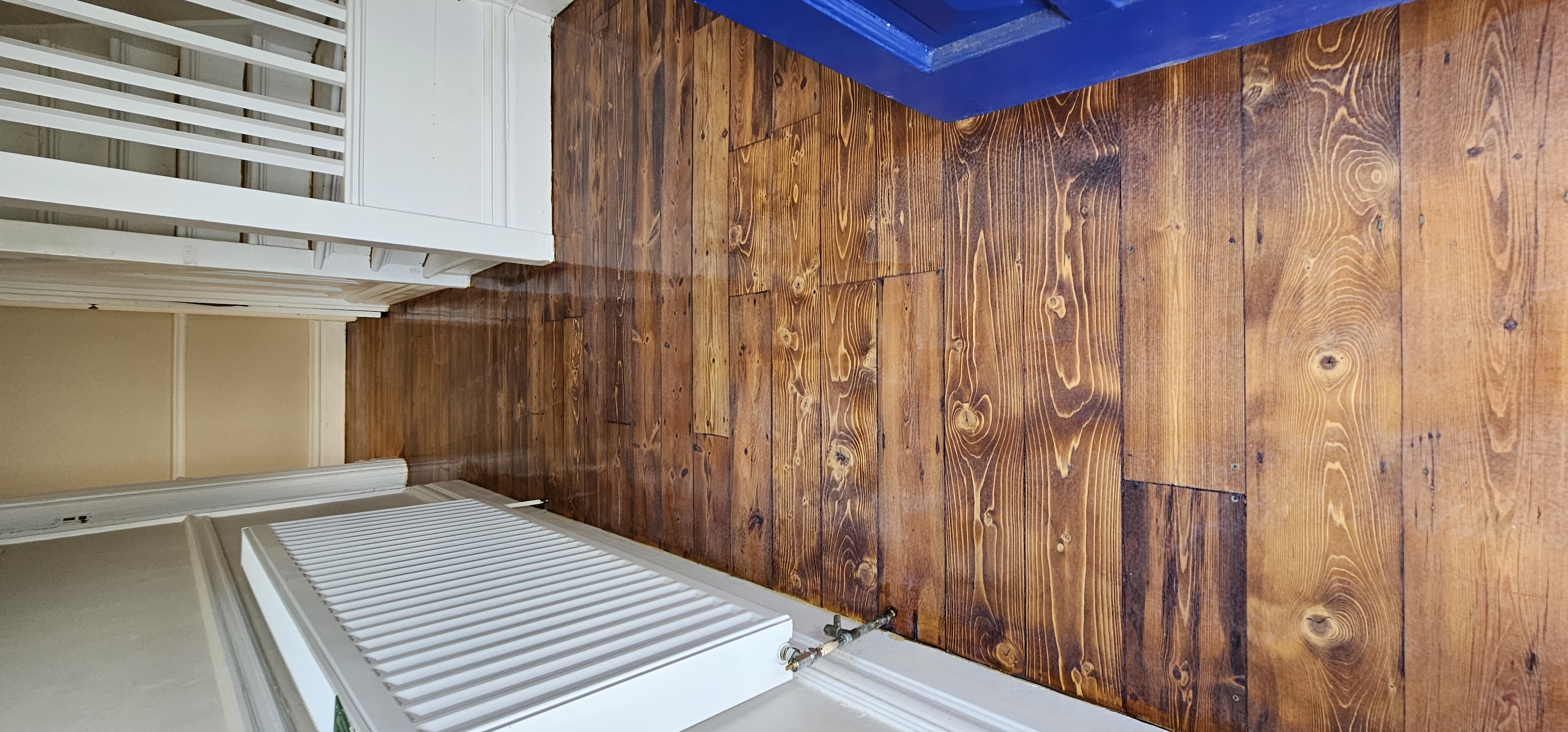
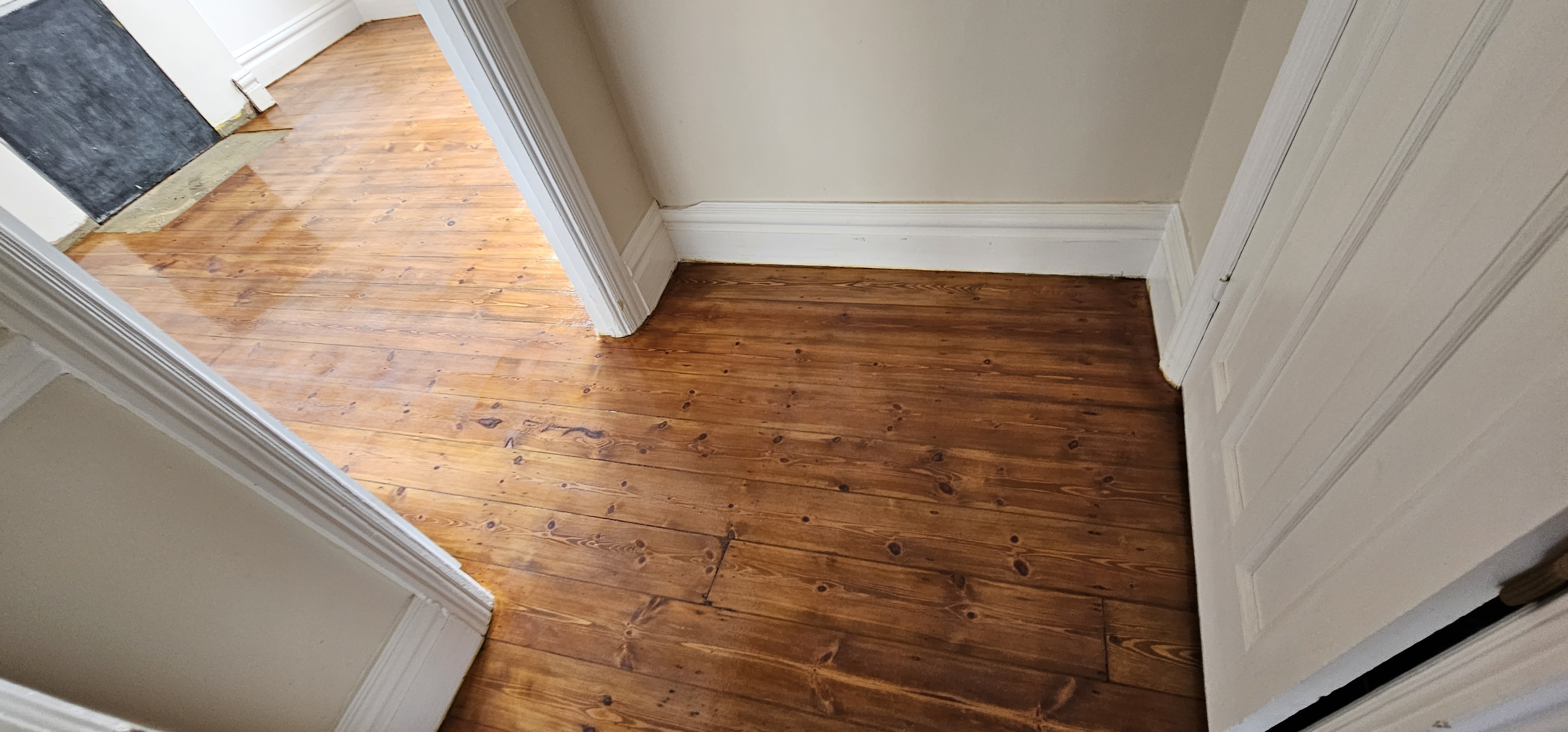
We recently completed a comprehensive floor sanding project on a Victorian terraced property in South Croydon. The homeowner had inherited original pine floorboards hidden beneath years of carpet and underlay, and wanted to restore them to their former condition. Our team removed all surface coverings, sanded the boards back to bare wood, and applied a natural finish that highlighted the grain and character of the timber.
Work carried out
- Complete removal of existing carpet and underlay
- Assessment and inspection of pine floorboards for damage
- Three stage sanding process using 40, 80, and 120 grit papers
- Dust extraction and containment throughout the property
- Filling of gaps and nail holes with colour matched filler
- Application of clear matte polyurethane finish in two coats
- Final inspection and minor touch ups
About the project
The property was a three storey Victorian home with approximately 150 square metres of original floorboards across two levels. The boards had been laid in the 1890s and, despite being covered for decades, had remained largely intact. There were some areas where the carpet had been glued down, requiring careful adhesive removal without damaging the timber surface. We also discovered a section where previous water damage had caused cupping and warping, which required specialist attention during sanding to level the boards safely without creating excessive dust or gouging.
Our approach involved setting up dust containment barriers and running negative pressure extraction equipment throughout the work. This meant the homeowners could remain in the property without respiratory issues or dust settling on furniture and fittings. We used a belt sander for the main work, followed by an orbital sander for the final stages, to achieve a consistent finish across all boards. The sanding itself took five working days, with preparation and finishing adding another two days to the project timeline.
About our Croydon service
Croydon has a diverse housing stock ranging from Victorian and Edwardian terraced properties to 1930s semis and modern apartment blocks. Many of the older properties in areas like South Croydon and Sanderstead contain original hardwood and pine floors that have been covered or damaged over time. These period properties respond exceptionally well to sanding and restoration, revealing timber that often improves in appearance with age. We also work regularly on newer builds in central Croydon, where engineered boards and laminate floors require different techniques and materials, though sanding is less commonly needed on these surfaces due to their factory finishes.
Working across Croydon means understanding the specific challenges of each property type. Victorian homes often have uneven floors due to natural timber movement and settlement, requiring careful sanding to avoid creating high spots or uneven finishes. Edwardian properties tend to have better quality timber but may have damage from old heating systems or moisture issues. Access can be tight in some of the older terraced properties, particularly on upper floors, so we plan routes carefully to minimise disruption to the rest of the home. Transport logistics in busy areas means we schedule work to avoid peak traffic times.
Frequently asked questions
How much does floor sanding cost in Croydon?
Floor sanding typically costs between £25 and £45 per square metre, depending on the condition of the boards, the number of sandings required, and the finish applied. Victorian and Edwardian properties with uneven floors or damage may fall toward the higher end of the range. We provide a detailed quote after a site visit, as factors like adhesive removal, gap filling, and repairs all affect the final cost.
How long does sanding take?
For a typical three bedroom terraced house, sanding and finishing usually takes between seven and ten working days. This includes preparation, the sanding process itself, and application of finish coats with adequate drying time between coats. Larger properties or those with significant damage can take longer. We complete work sequentially rather than rushing, as this produces a better finish.
Is the dust-free sanding process really dust-free?
Our dust extraction system removes approximately 99 percent of fine particles created during sanding, using high powered negative pressure equipment. While the process is not literally dust-free, the containment and extraction means you won't see dust settling on surfaces around the property. We use sealed containment barriers, run extraction throughout the work, and wear respiratory protection. Families with allergies or respiratory sensitivities have successfully remained in the home during our work.
Project Gallery